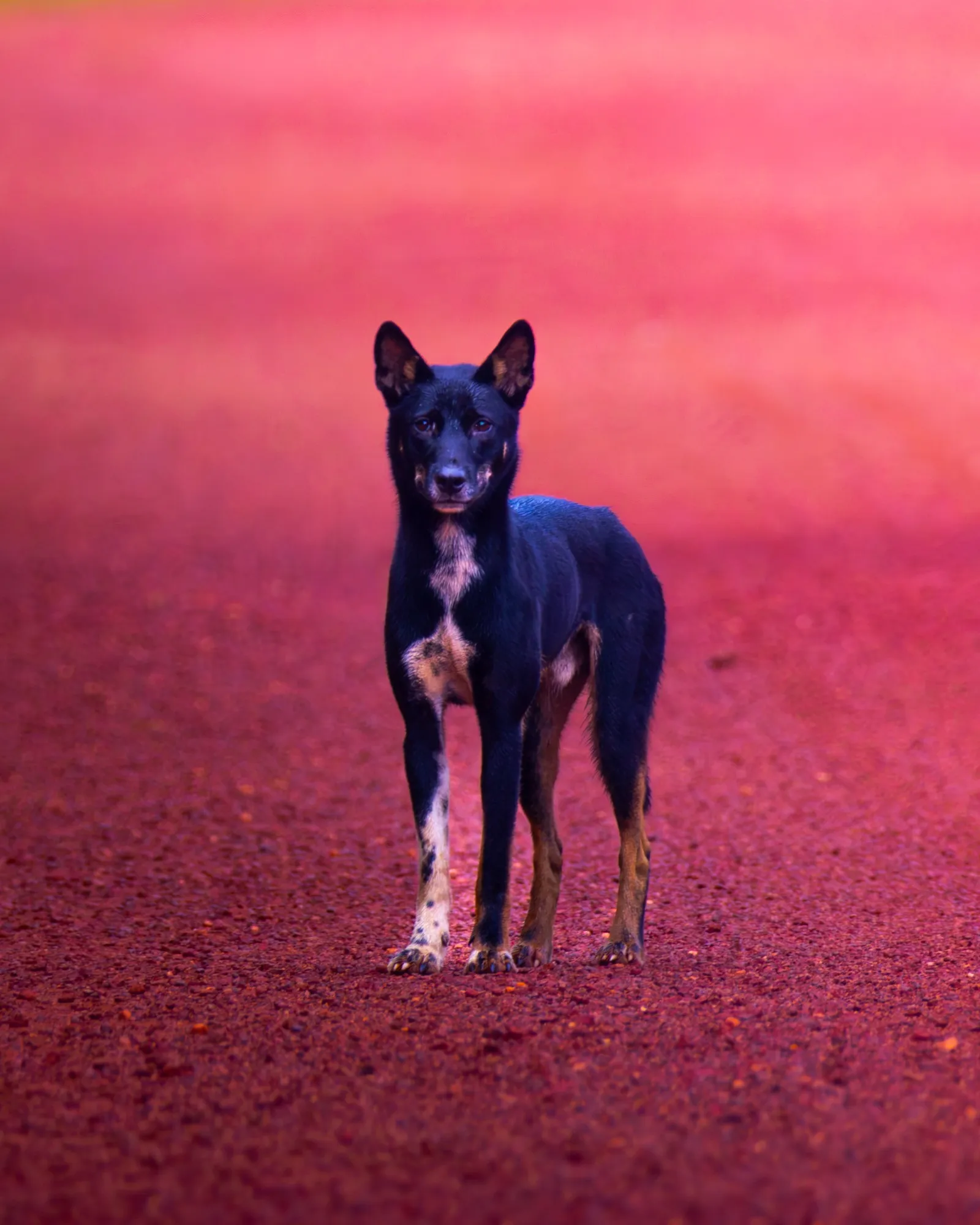


A black-and-tan dingo standing on a red dirt road, looking straight at the camera

Scavenging ecology · Disease ecology

Following carrion to understand how wildlife,ecosystems and disease connect.

I'm a PhD researcher at the University of Sydney studying the who, when and why of carcasses, and what that means for nutrient cycling, biosecurity and the spread of wildlife disease.

  • Camera-trap field studies
  • Desert, forest & alpine bioregions
  • Cape York, Queensland

Research

Four questions that run through my work

All research

Selected publications

Recent and featured papers

All publications
2026

Royal Society Open Science

Heads or tails: selective body part feeding by scavengers across species and season

Meisuria NY, Spencer EE, Cairncross RJ, Newsome TM

Using camera traps on 40 kangaroo carcasses in the Wolgan Valley, this study shows that scavengers pick favourite body parts. Wedge-tailed eagles often start at the head and abdomen, dingoes favour the tail, and those preferences shift with the season and as a carcass decays, while red foxes change their behaviour much less.
2024

Oikos

Scavenging and social interaction of an apex avian scavenger is governed by bioregional and seasonal variation

Meisuria N, Spencer EE, Cairncross RJ, Crowther MS, Newsome TM

Wedge-tailed eagles are Australia's apex avian scavenger. Monitoring 120 kangaroo carcasses across desert, forest and alpine bioregions, in open and closed habitats and warm and cool seasons, showed how strongly place and season shape when eagles scavenge and how they interact at carcasses.

How the research works

From a single carcass to a biosecurity question

  1. Carcasses placed across contrasting landscapes

    Kangaroo carcasses are set out in desert, forest and alpine bioregions, in open and closed habitats, across warm and cool seasons.

  2. Camera traps record every visit

    Motion-triggered cameras capture which species arrive, how long they feed, which body parts they target and how they interact with each other.

  3. Patterns across species, seasons and decay

    Statistical models separate the effects of bioregion, habitat, season and decomposition stage on scavenger activity and behaviour.

  4. Informing disease risk and biosecurity

    Carcasses are meeting points for wild and domestic animals. Understanding them helps anticipate how threats like rabies or H5N1 bird flu could spread.

Publications
6
Research projects
3

Collaborate

Working on a question worth exploring?

I'm open to collaborations on scavenging, carrion ecology and wildlife disease, and to talking with students, land managers and journalists.

Start a conversation